THE OLDEST
Clay and china
Plain clay spheres came first. Then porcelain chinas, painted by hand with lines and simple leaves.
Spot the difference doodlemarbles
00A SHORT HISTORY IN GLASS
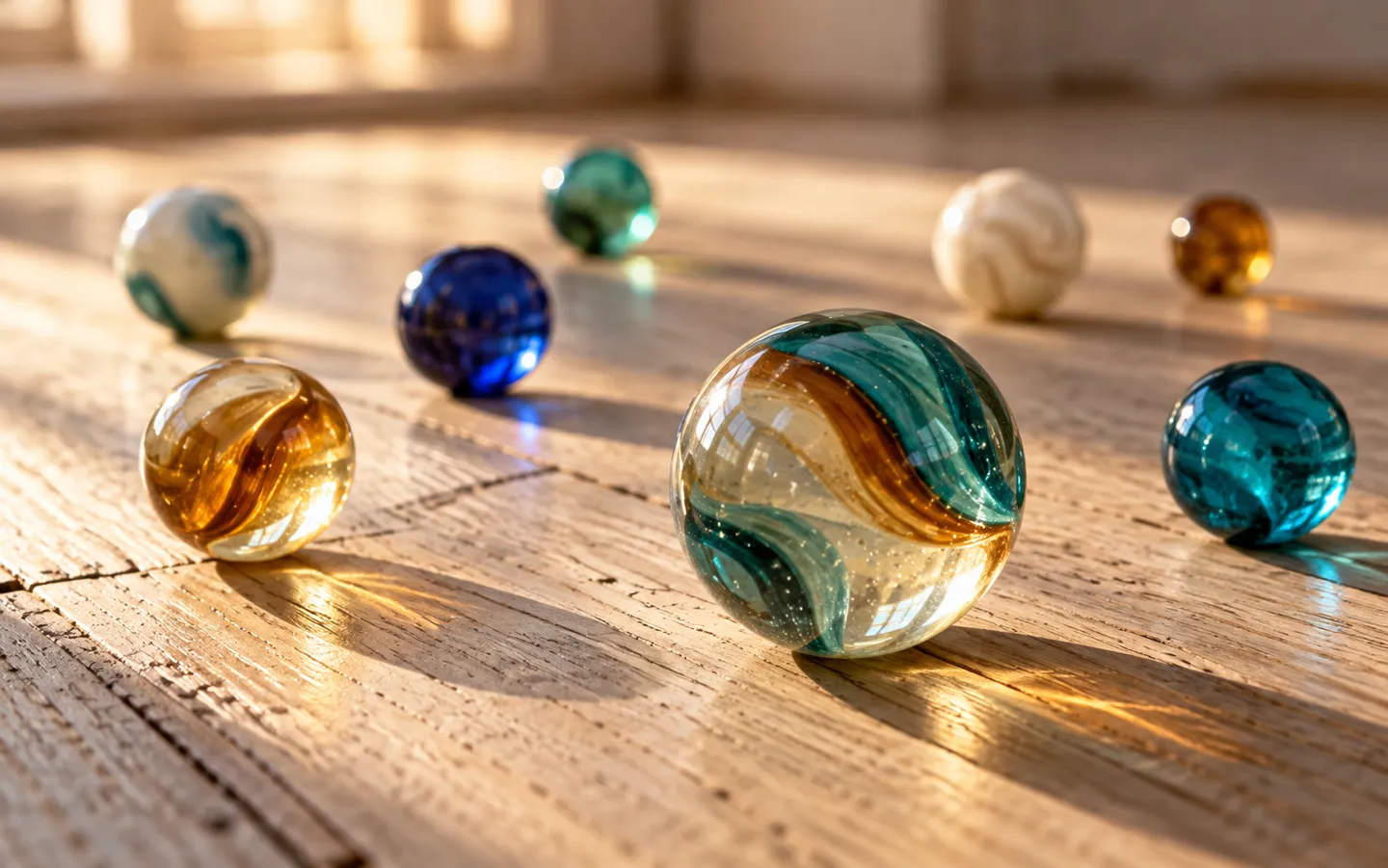
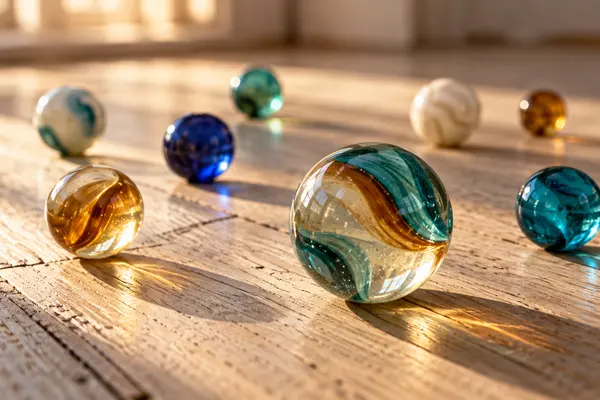
Every marble tells you when, and how, it was made.
The oldest are plain clay. Then came hand-painted china, swirls worked by hand over a flame, and finally a 1905 machine in Akron, Ohio, that rolled glass into perfect spheres. Here is how to tell them apart, and how the classic ring game is played.
Plain English, with the sources linked.
Spot your marble01Principles
02THE SHORT ANSWER
The material and the finish
are the biggest clues to a marble's age.
THE OLDEST
Plain clay spheres came first. Then porcelain chinas, painted by hand with lines and simple leaves.
Spot the differenceHANDMADE GLASS
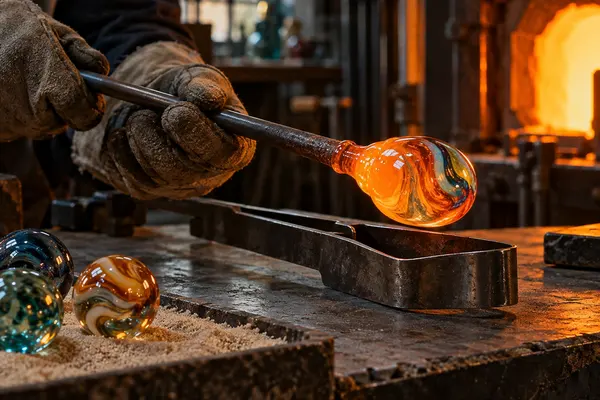
German makers twisted coloured glass threads into a core. A museum example from 1850 to 1910 has one end ground.
See howTHE GAME
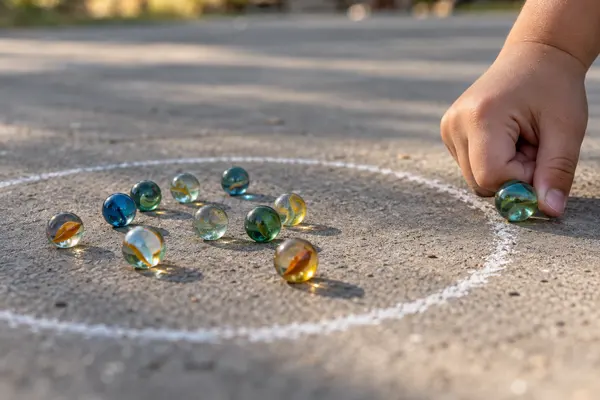
Thirteen marbles in an X, a 10-foot circle, and a shooter flicked from the knuckle.
How to play03SPOT YOUR MARBLE
Pick the kind that looks most like yours. The bar runs from the oldest kind to the machine age, based on finds at Fort Vancouver, a museum example and the 1905 patent.
This is a rough guide, not a valuation. Reproductions of older styles exist, so a collector or museum is the place to confirm a marble's age.
04TWO WAYS TO MAKE A SPHERE
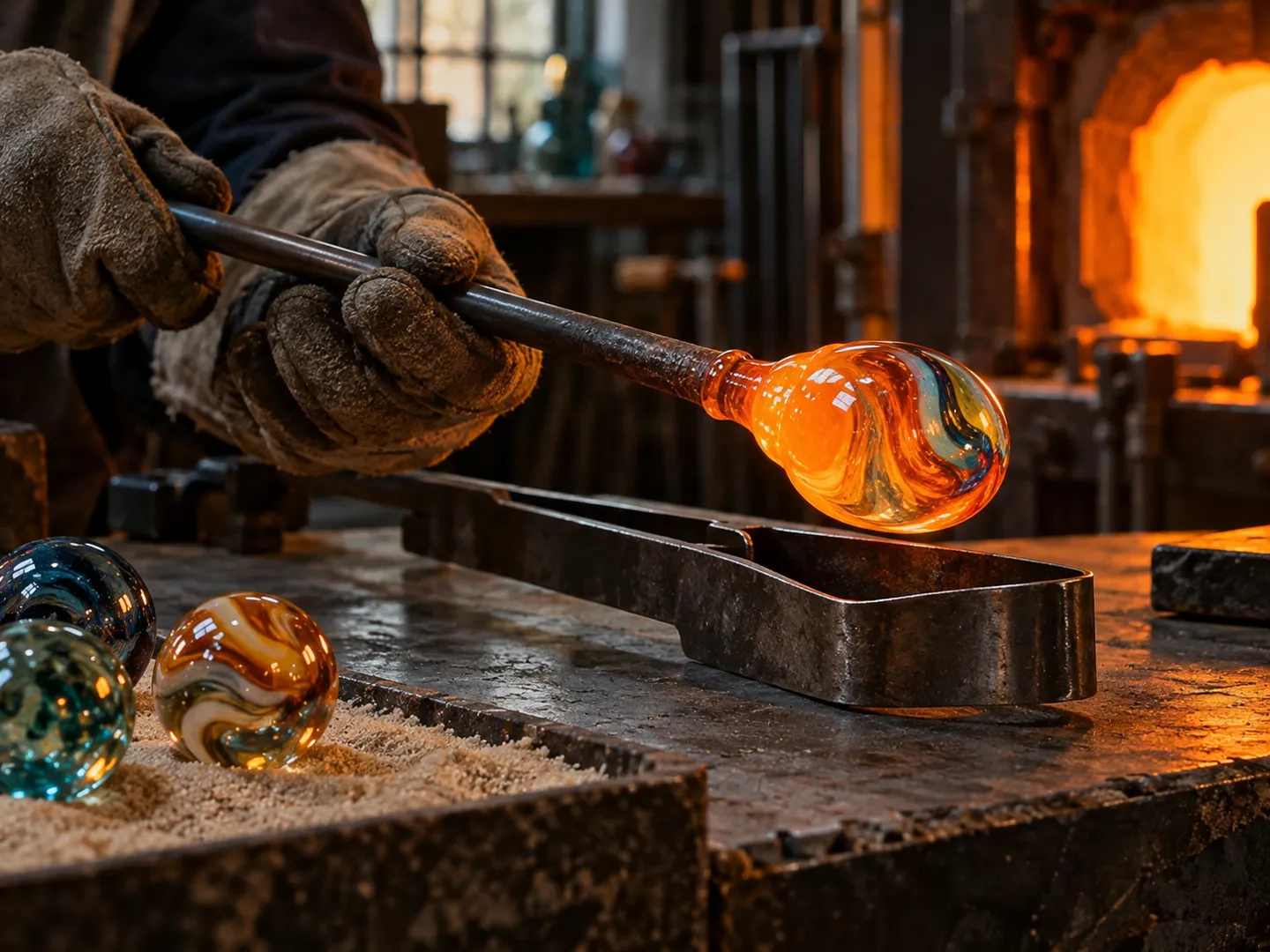
The shift from flame to machine
is the big turning point in marble history.
1850 to 1910
Corning Museum of Glass example
A lampworked German marble in the Corning collection encloses a double-series twist of coloured threads, with yellow and white spiral bands around a striped core. One end is ground.
HANDMADE · GERMANY
24 Oct 1905
US patent 802,495, granted
Martin F. Christensen's machine took soft glass and rolled it between two grooved rolls into a sphere, from small marbles to balls an inch or more across, needing no further finishing.
MACHINE · AKRON, OHIO
The patent made a point of it: balls rolled by the machine needed no further finishing, unlike work done by hand.
05PLAY RINGER
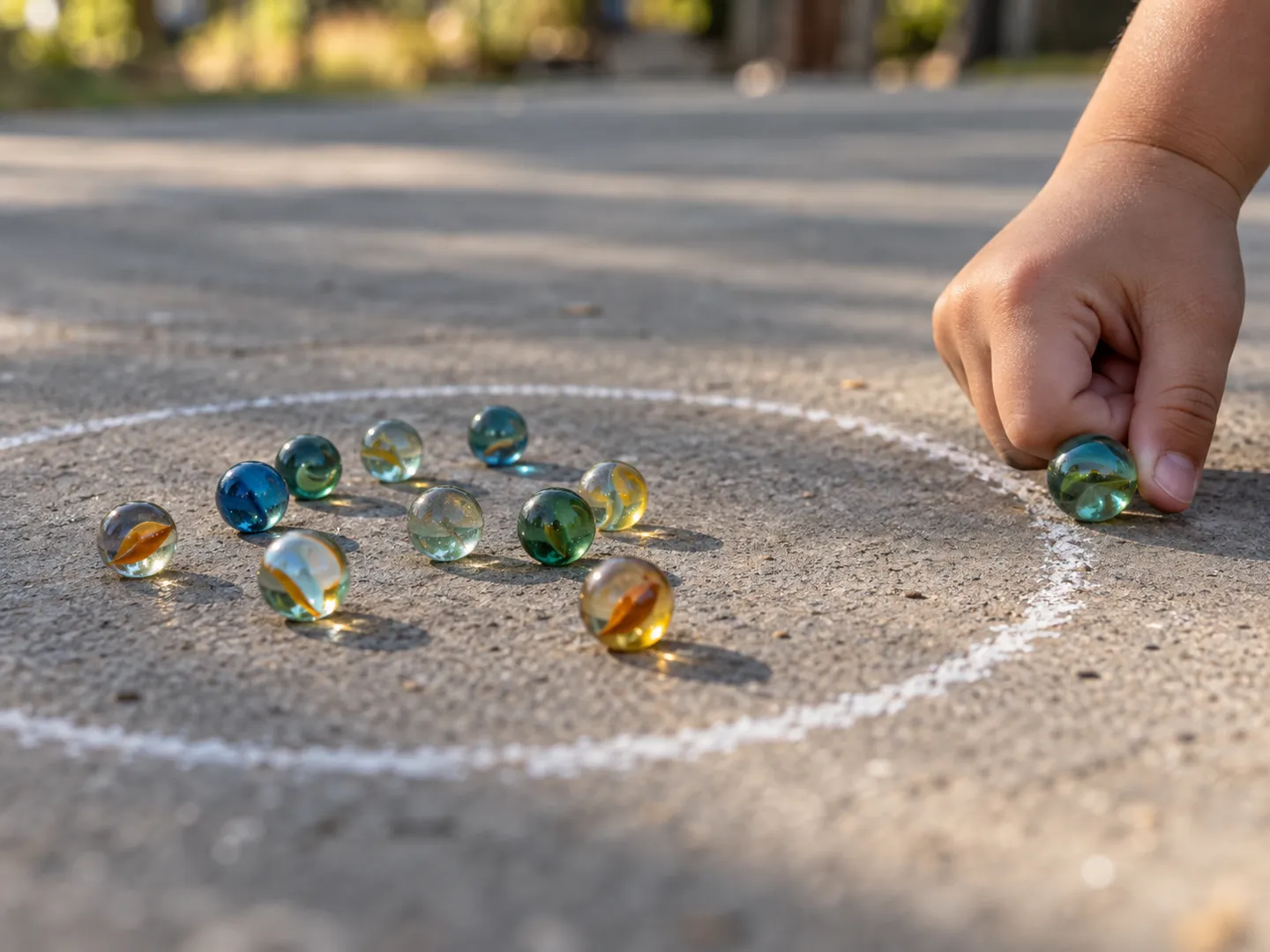
The tournament ring is a 10-foot circle. On a playground, chalk works; for a smaller space, scale it down and agree it first.
Place 13 target marbles in an X shape in the middle of the ring before the first shot.
Rest a knuckle on the ground at the edge of the ring and flick your shooter with your thumb to knock targets out.
Marbles are a choking hazard. In the US, marbles for children aged 3 and over must carry a cautionary statement on the package.
06MARBLE FACTS
Archaeologists at Fort Vancouver, a 19th-century fur-trade post and army base in Washington State, have found only 40 or so marbles, most in the village west of the fort.
The porcelain marbles found there are unglazed and hand-painted, usually in red, green or black, with parallel or crossing lines and simple leaves.
Christensen filed his marble-rolling machine in December 1902. The patent was granted in October 1905, almost three years later.
In Melbourne's Little Lon district, children used the lanes as a playground. A former resident who grew up there between 1920 and 1940 recalled: "We even played marbles too."
The National Marbles Tournament in Wildwood, New Jersey, has run since 1922. Players aged 8 to 14 compete for college scholarships.
07QUICK QUESTIONS
Short answers to the questions people ask most.
At Fort Vancouver in Washington State, the earliest marbles found are small, undecorated clay spheres in tan or orange. Glazed and painted porcelain and glass marbles came later.
A marble made of porcelain. The ones found at Fort Vancouver are unglazed, larger than the clay marbles and hand-painted, usually in red, green or black. They were imported from Germany after the 1840s.
Martin F. Christensen of Akron, Ohio, filed a patent in 1902 for a machine that rolled glass into spheres between two grooved rolls. It was granted on 24 October 1905.
At the National Marbles Tournament, 13 marbles are set in an X inside a 10-foot circle and players shoot to knock them out. The tournament has been held since 1922.
In the United States, the Child Safety Protection Act requires a choking-hazard cautionary statement on marbles meant for children aged 3 and over, and bans balls of 1.75 inches or less intended for children under 3.
08Sources
A NAME WITH A BIT OF SWIRL
doodlemarbles.com is part of the DoodleSale portfolio. It isn't in an auction right now, but you can ask about leasing it.